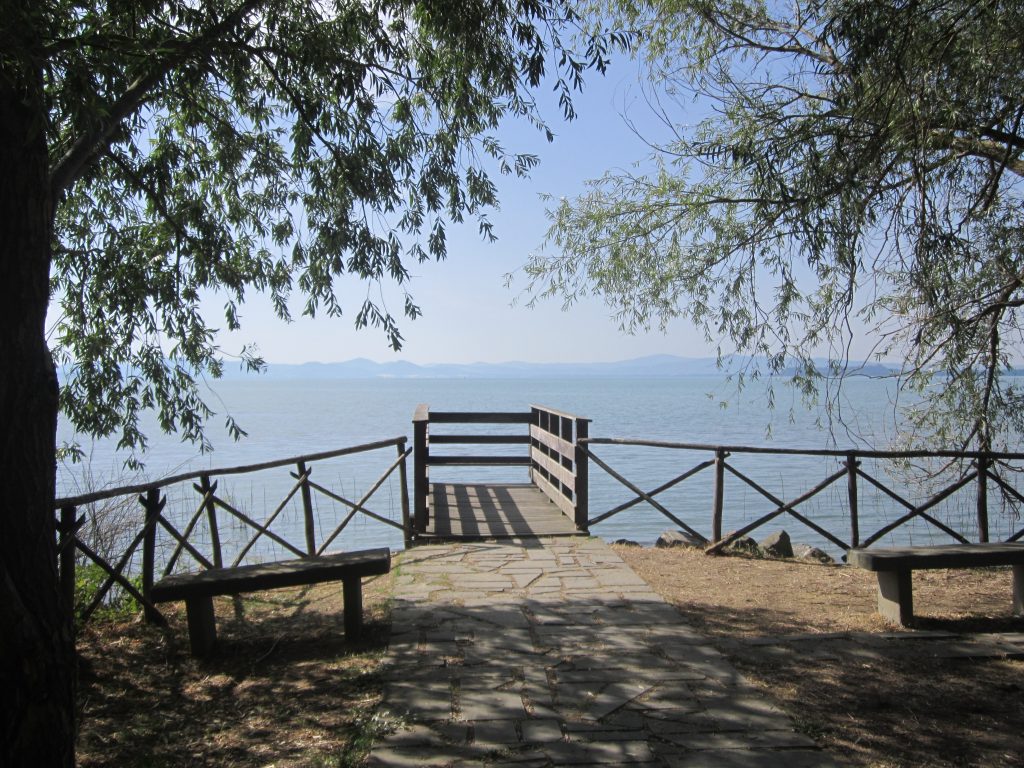


Lake Trasimeno is Italy’s fourth largest lake, its name derives from an ancient tragic legend involving the love between Prince Trasimeno, son of the Etruscan king Tirreno, and the nymph Agilla, born right around this stretch of water. The groom disappears into the lake the day after the wedding and the nymph searches for him in vain. Since then, in the wind and waves of Lake Trasimeno, there would still be the lament of Agilla.
Trasimeno is shallow, muddy, and rich in fish, including pike, carp, and tench. During the last 10 years, it has been 5 meters deep.
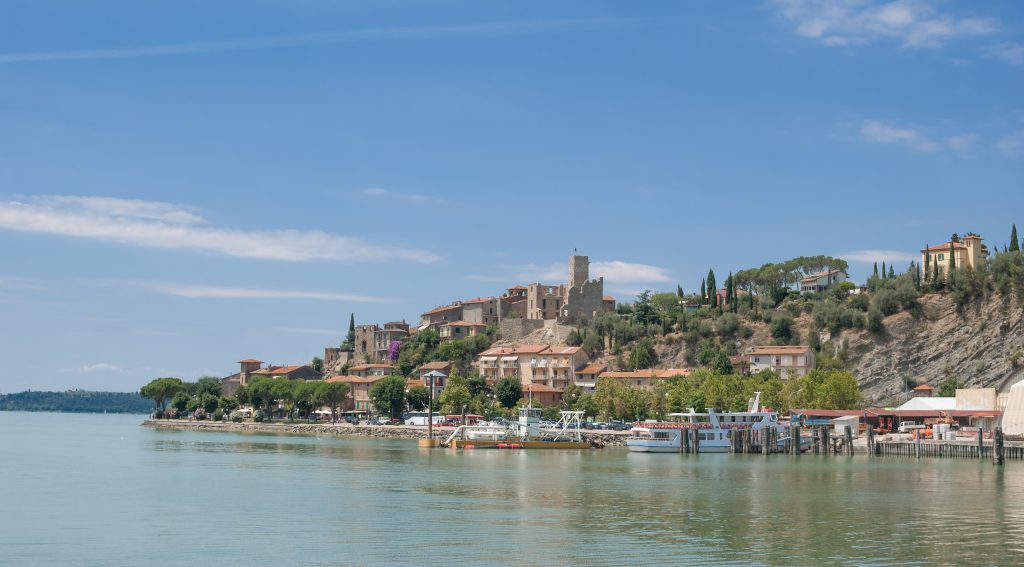
Passignano and Tuoro are two towns on the shores of the lake.
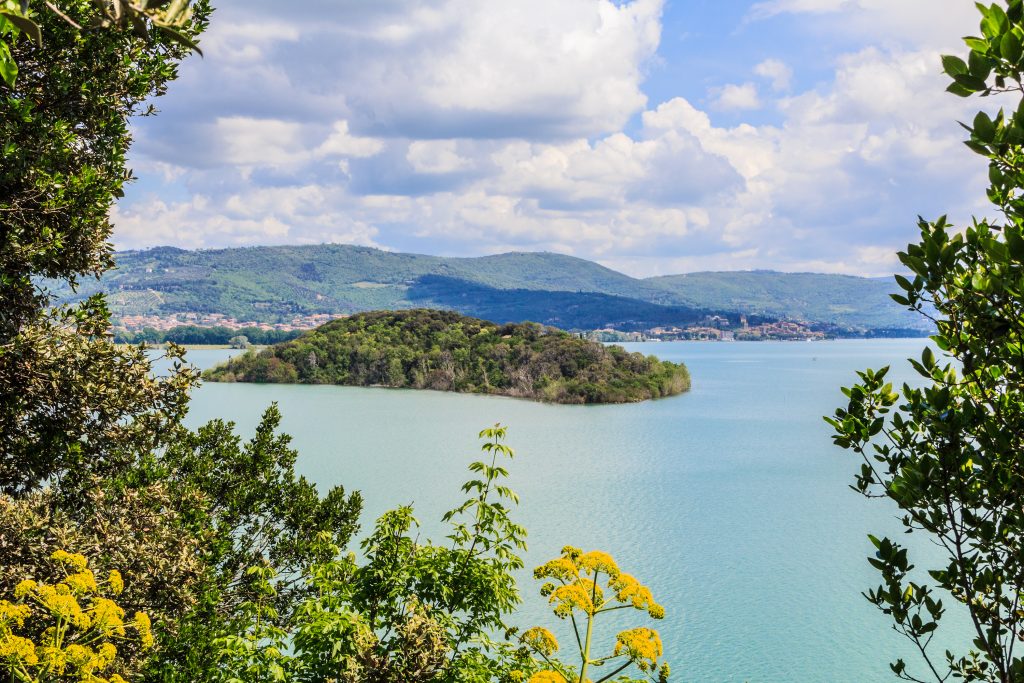
Passignano is dominated by the fortress. Among the buildings of artistic importance are the Church of San Cristoforo, an old parish church, the 15th-century Church of San Rocco, and the Church of San Bernardino. The entire area has many places of environmental interest: regular boats leave from Passignano for Polvese and Maggiore Island, where we can visit the Romanesque Church of San Salvatore and the Church of San Michele Arcangelo.
Tuoro is a typical medieval town, in the center of the town we can see the Palazzo della Capra and the Church of Santa Maria Maddalena.
Nearby, on the lakeside at Lido di Tuoro, in the locality called Punta Navaccia, exists an interesting outdoor art gallery, Campo del Sole (Field of the Sun), featuring 27 large sculptured columns in sandstone. They are set in a spiral around a center table surmounted by a symbol of the sun.
The first large-scale historical event was the “Battle of Trasimeno” on 24 June 217 AD when Hannibal’s Carthaginian army annihilated the Roman army.
A guided tour takes in the nearby archaeological excavations, including the “Ustrina”, large limestone pits that Hannibal had dug to burn the bodies of the soldiers killed in battle.