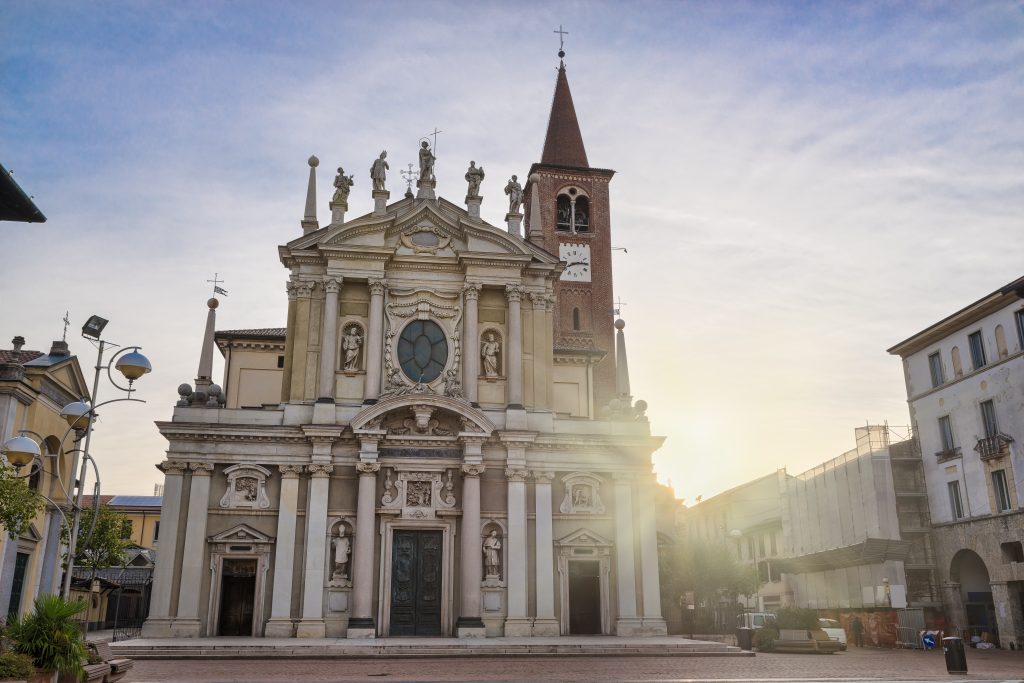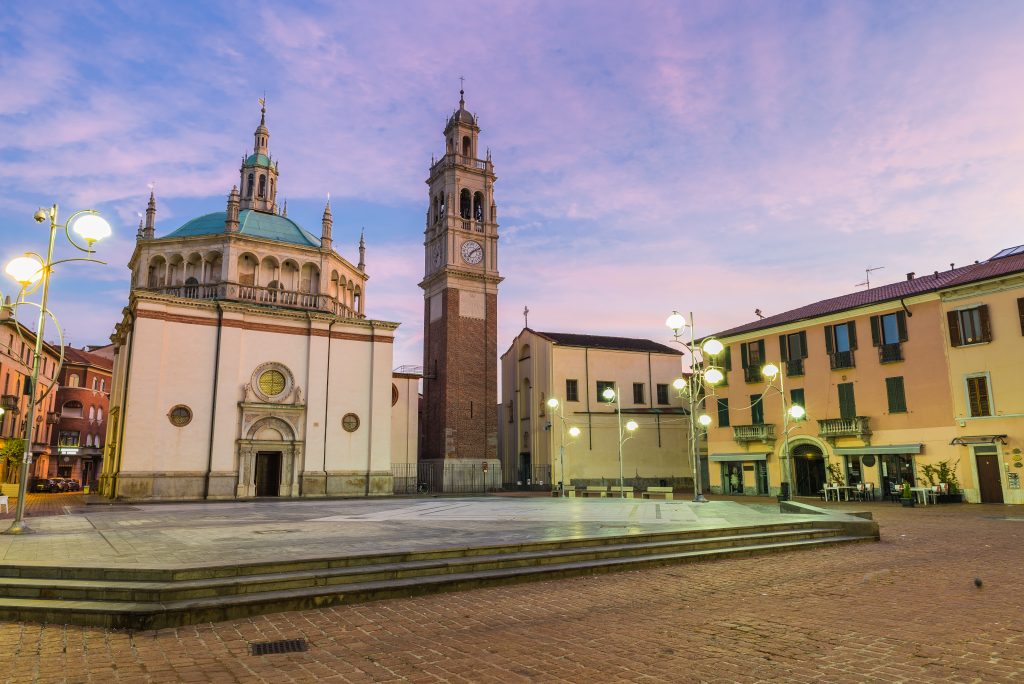


Busto Arsizio is an Italian city located in the southern part of the province of Varese, in the region of Lombardy. With a population of around 83.000 inhabitants, Busto Arsizio is the most populated town in the province of Varese.
The history of Busto Arsizio dates back to Roman times but became more significant during the Middle Ages. For example, the famous Battle of Legnano (1176), when Emperor Frederick Barbarossa was defeated by the Lombard League, took place next to Busto Arsizio. During the 19th century, Busto Arsizio experienced considerable industrial development and, thanks to the textile industry, became the so-called “Manchester of Italy”.
Today Busto Arsizio is an industrial and residential city, well connected to Milan. The economy of Busto Arsizio is characterized by various leading sectors, including textiles, mechanical engineering, retail, and fashion.
Busto Arsizio is also known for some cultural and religious traditions, including celebrations in honor of San Giovanni Battista, the city’s patron saint.
The most remarkable church, built during the Renaissance period and located in the city center, is the shrine of Santa Maria di Piazza.
The Museum of Textile provides an immersion into the city’s industrial history.
In Busto Arsizio there is a famous tradition called “Gioeubia”: a puppet of an old woman made of paper and old clothes is burned in order to bring luck. It’s celebrated every year, on the last Thursday of January, to symbolize the end of winter and its troubles, waiting for a new spring.
Another expression of the local identity is the traditional food. In Busto Arsizio, you can taste a typical dish called “bruscitt”: meat cooked for a long time, served with polenta (made by maize meal).
In summary, Busto Arsizio presents itself as a dynamic city rich in history, where Roman roots, medieval marks, and industrial textile traditions harmoniously coexist, looking toward the future.